The physical layer of AI that enterprise teams often underestimate, explained for decision-makers, not engineers.
Every email, AI tool, cloud application, and financial transaction runs through physical infrastructure housed in facilities that few people ever think about. Until the infrastructure becomes a problem.
What a data center actually is
A data center is a physical facility that houses the computing hardware, servers, storage systems, and networking equipment, that runs digital workloads. The facility provides power, cooling, physical security, and network connectivity to keep that hardware running continuously.
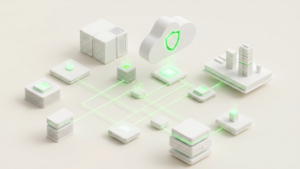
At its core, a data center has five components: servers, where data is processed and AI models run; storage, where data is held; networking, the infrastructure that moves data in and out of the facility; power, the electrical infrastructure that keeps everything running without interruption; and cooling, the systems that prevent the hardware from overheating. Cooling is where architecture diverges significantly.
Why the architecture choices matter
Not all data centers are built the same. The decisions made about cooling architecture, tenancy model, and power capacity determine which workloads a facility can support and which compliance postures it can satisfy.
Tenancy model refers to whether the hardware and facility are shared with other organizations (multi-tenant) or dedicated exclusively to one (single-tenant). For enterprises with HIPAA, fintech data residency, or enterprise AI governance obligations, tenancy is not a preference. It is a compliance requirement.
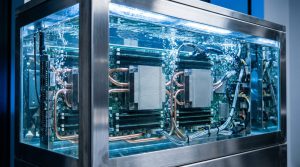
Cooling architecture determines the maximum density, the amount of compute that can run in a given physical space. Traditional air-cooled data centers support 5 to 15 kilowatts per rack. Modern AI GPU clusters require 80 to 200 kilowatts per rack. Immersion cooling, which submerges hardware in non-conductive fluid, supports these densities while consuming up to 40% less energy.
What this means for enterprise AI
The organizations running the most demanding AI workloads are not doing it in shared cloud environments. They are operating in purpose-built dedicated infrastructure designed around the thermal, compliance, and capacity requirements of AI at scale.
For mid-market enterprises, healthcare systems, and regulated financial services firms, the question is not whether to care about data center architecture. It is whether to engage with it proactively, before a compliance audit, a procurement cycle, or a workload deployment forces the decision.
EG AI Corp is building the infrastructure layer for the organizations that have already decided.